



Replacing a damaged section?
If water damage or a large hole means replacing whole sheets, estimate how many sheets you need for the wall or ceiling.
Open toolMost drywall repairs come down to three questions: what kind of damage is it, how big is it, and what caused it. A crack is different from a hole. A crack at a window corner usually means the framing moved. A crack along a seam usually means the original tape job failed. Fix the symptom without the cause, and the same crack shows up again.
Use the groups below by type of damage. Cracks starts with diagnosis, then covers the repair. Holes and patches covers the patch methods. Nail holes and small dings need only mud. For small to medium holes, a California patch works, but we prefer a hammock patch: it is quicker, easier and stronger. Bigger holes can take a strip-backed patch. Dents, nicks and screw pops covers small damage that still needs the right steps, like sealing torn face paper before you put mud on it. Water damage covers what to cut out and what can be dried.
The last step is the one people skip: making the repair blend in. A flat, well-feathered patch can still show if the texture or paint doesn't match. The "Finish the repair" group covers matching texture and painting so the patch blends in.
Find out why it cracked before you fix it, or it will come back.
Pick a patch method for the hole you have.

Which patch to use, from nail holes to fist-sized damage.
The well-known paper-faced patch for small to medium holes. No backing or screws needed.

Our pick for small to medium holes: quicker, easier and stronger than a California patch.
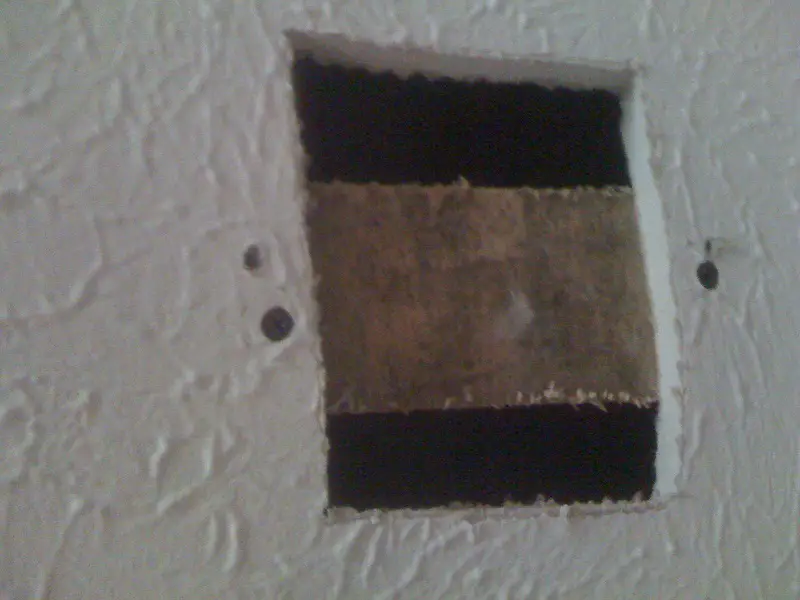
Wood or drywall backing strips behind the hole for a screwed-in patch.
Small damage, fast fixes.
An overview of nicks, dents and scratches, and which fix each needs.

Shallow damage where the face paper is still intact.
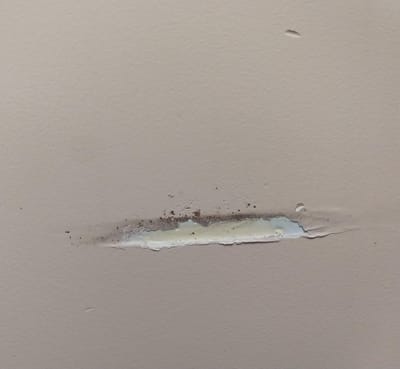
How to seal torn face paper before you mud, so it doesn't bubble.
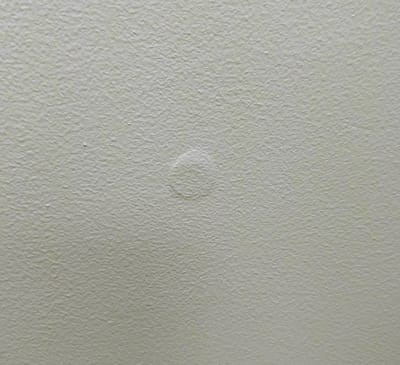
Why fasteners pop and how to reset them for good.
Decide what can be dried and what has to come out.
Make the repair disappear under texture and paint.

A side-by-side look at the main repair methods.
Blend new texture into the old around a patch.
How to get close on the hardest texture to match.
Why touch-up paint flashes, and how to prime and paint so it blends.
If water damage or a large hole means replacing whole sheets, estimate how many sheets you need for the wall or ceiling.
Open toolPaper tape bedded in joint compound is the usual choice for seams and inside corners. Self-adhesive mesh is easier to apply but works best with setting-type compound (hot mud). Either way, a crack caused by movement can come back unless you deal with the cause.
A hammock patch. Most people have heard of a California patch and would pick it for small to medium holes, but we have found that a hammock patch is quicker, easier, and stronger. Haven't heard of it? See how to do a hammock patch.
Usually the board was not pulled tight to the framing, or the framing shrank or moved. Drive a new screw next to the popped one to pull the board tight, then reset or remove the old fastener and re-coat.
Patched areas absorb paint differently from the wall around them, and a different texture or sheen shows under raking light. Prime the patch, match the texture, and paint the whole wall section if spot touch-ups flash.