Types of Drywall Mud: Hot Mud vs Pre-Mixed Joint Compound
Quick answer: Drywall mud comes in two families. Hot mud (setting-type joint compound) is a powder you mix with water. It hardens by a chemical reaction in a set time printed on the bag (5, 20, 45, 90 minutes and so on). Pre-mixed joint compound (all-purpose, lightweight, taping and topping) comes ready to use in a bucket or box and hardens only as the water evaporates, usually overnight. Use hot mud when you need speed, strength or a fill that won’t shrink. Use pre-mixed for most taping and nearly all finish coats, because it is much easier to sand.
| Mud | Comes as | Hardens by | Best for | Sanding |
|---|---|---|---|---|
| Hot mud, “easy-sand” type (e.g. USG Sheetrock Easy Sand, ProForm Quick Set) | Powder, bags | Chemical set (5–210 min, by product) | Patches, filling gaps, bedding mesh tape, first coat on bead, same-day multi-coat work | Moderate: harder than pre-mix |
| Hot mud, hard-setting type (e.g. USG Durabond) | Powder, bags | Chemical set | Deep fills, plaster repair, prefill where strength matters | Very hard, don’t use for finish coats |
| All-purpose (pre-mixed) | Bucket or box | Drying | Taping, first and second coats, texture | Moderate |
| Lightweight all-purpose | Bucket or box | Drying | Second and finish coats, skim coats | Easy |
| Taping compound | Bucket or box | Drying | Embedding paper tape where bond matters most | Harder |
| Topping compound | Bucket or box | Drying | Final coats only, never for embedding tape | Easiest |
Set times and product names vary by brand and region. This guide is about categories, not brand endorsements.
What is hot mud?
Hot mud is setting-type joint compound. It comes as a dry powder in plastic-lined bags, and it starts an irreversible chemical reaction the moment it touches water. The number on the bag is the set time: 5-, 20-, 45- and 90-minute versions are common, and some lines go longer. When it sets, it is hard. You can’t thin it back down, and you can’t save it for tomorrow.
Nobody knows for sure where the name “hot mud” came from. Setting compound gives off a little heat as it cures, and once you add water you have to hurry because it will set in the pan if you don’t keep moving. Either explanation fits.
Set time vs dry time
The set time on the bag is when the mud is hard enough to coat again, not when it is dry. In practice:
- Working time is shorter than the label. Plan on using a batch in about two-thirds of the listed time. 45-minute mud often starts to stiffen around the 30-minute mark. Warm water, a hot room, or a dirty bucket speeds it up. Cold water and cool, humid rooms slow it down.
- You can recoat as soon as it sets, even before it is fully dry. That is the whole point: tape, fill and second-coat a patch in one visit.
- Let it dry fully before primer and paint. Hot mud darkens when wet and lightens as it dries. Depending on thickness and conditions, that can take several hours to overnight.
When to use hot mud
- Patches and repairs where you don’t want to come back tomorrow for every coat. See the California patch.
- Filling gaps wider than about 1/4" around boxes, at butted ends, or along bad cuts before you tape. Pre-mixed mud shrinks and cracks when used to fill deep gaps; setting compound shrinks very little so it is good for a quick filler.
- Bedding mesh tape. Self-adhesive mesh tape needs the strength of setting compound. Pre-mixed mud should not be used with fiberglass mesh tape. Read more in mesh vs paper tape.
- First coat on corner bead, especially metal bead, where a hard base resists dings. See how to coat corner bead.
- Cold or damp jobs where pre-mix would take days to dry.
- Tight schedules. Many crews tape and first-coat in a single day so setting compound is used for taping.
Skip hot mud for finish coats and skim coats. It is much harder to sand than lightweight pre-mix, and any ridges you leave are difficult to fix.
How to mix hot mud (without ruining a batch)
- Start with a clean bucket and clean tools. Bits of old set mud act like a starter and can make a fresh batch go off in minutes.
- Water first, then powder. Use clean, cool water. Add the powder in until it sits just above the water line, mix to a smooth, thick-yogurt consistency.
- Mix small. Only mix what you can spread in about half to two-thirds of the set time.
- Don’t re-temper. Once it starts to stiffen, adding water just makes weak, crumbly mud. Toss it and mix fresh.
- Clean up right away. Scrape the pan and knives before the batch sets. Never rinse hot mud down a drain; it can set in the trap.
Durabond vs easy-sand hot mud
“Durabond” is a USG trade name for its hard-setting compound often used with plaster. It was among the first widely used setting compounds, so in a lot of areas “Durabond” became slang for any hot mud. Hard-setting products like it are extremely strong and very hard to sand. They are great for deep fills, plaster repair and prefill, and miserable as a top coat. Lightweight “easy sand” setting compounds give up some hardness for much easier sanding, and that is what most finishers use for drywall repairs.
Pre-mixed joint compound types
Pre-mixed mud is what most people mean by “drywall mud.” It comes ready to use in 4.5-gallon buckets or in boxes holding a bagged liner. Check the label: some boxes hold 3.5 gallons, so a “cheap” box may just be a smaller one. Most finishers thin it with a little water. Bedding tape takes a thinner mix than finish coats, and mud for pumps and automatic tools is thinner still.
All-purpose: the workhorse. It has enough bond to embed paper tape and spreads well for first coats and texture. It is more difficult to sand and harder than lightweight, so many finishers don’t use it for the final coat.
Lightweight all-purpose: lighter bucket, easier sanding, and usually less shrinkage, although that depends on the amount of water added, so it is the common choice for second and finish coats. Some finishers feel it is not as good for bonding drywall tape as regular all-purpose.
Taping compound: made for the strongest tape bond and the first coat. It is harder to sand, so don’t use it for finish coats. In practice, this is rarely used on jobs because most finishers prefer All-purpose mud.
Topping compound: made for final coats only. It is smooth and the easiest to sand, but it is a weak tape adhesive, so never embed tape with it.
Which mud for which coat
| Step | Common choice | Good alternative |
|---|---|---|
| Prefill gaps and damaged areas | Setting compound (hot mud) | — |
| Embed paper tape | All-purpose or taping compound | Setting compound - strongest and fast but difficult to work with. |
| Embed mesh tape | Setting compound (hot mud) | — |
| First coat on bead | Setting compound or all-purpose | Taping compound |
| Second coat | All-purpose or lightweight | Easy-sand setting compound if you’re in a hurry |
| Finish coat / skim | Lightweight all-purpose or topping | — |
| Spray or hand texture | All-purpose (thinned) or texture-specific product | — |
You can put pre-mixed mud over hot mud any time after it sets. You can put hot mud over pre-mixed mud, after the pre-mixed mud completely dries but it is not recommended. Wet pre-mixed mud under a hard setting coat can crack or stay soft.
Hot mud vs all-purpose (regular) mud
| Hot mud (setting) | All-purpose (pre-mixed) | |
|---|---|---|
| Ready to use? | No, mix with water | Yes |
| How fast to recoat | As soon as it sets (label time) | After it dries, usually about 24 hours per coat |
| Shrinkage | Low | Higher, so pre-fill deep gaps |
| Strength / hardness | Higher | Lower |
| Sanding | Harder (very hard for Durabond-type) | Easier |
| Shelf life once opened | Powder lasts if kept dry; mixed batch only lasts until it sets | Bucket lasts if sealed and kept from freezing |
| Best use | Patches, fills, mesh tape, fast schedules | Taping, coating, general use |
Is hot mud waterproof?
No. Once hot mud sets, it stands up to humidity better than pre-mix, but it is still gypsum and will soften with repeated wetting. It is not a shower or wet-wall product. Use cement board and a waterproofing membrane behind tile in wet areas, and moisture- or mold-resistant board in bathrooms.
Buying and storing mud
- Keep powder bags dry and closed. Even a few hard lumps in a bag will scratch your seams, so throw out a bag that has taken on moisture.
- Keep pre-mixed buckets from freezing, and keep the lid sealed. Skim off any dried crust instead of mixing it in.
Price check: setting compound is sold in roughly 18–25 lb bags and pre-mix in 3.5–4.5 gallon containers. Prices vary a lot by region and supplier.
Not sure how much you need? Start with the sheet count calculator, then use the coverage chart printed on the bag or bucket for your product.
Common mistakes
- Mixing a whole bag of 20-minute mud for one person. It sets in the bucket.
- Using setting compound for the final coat, then spending an hour sanding it.
- Embedding tape with topping compound. The tape lets go later and bubbles.
- Painting over hot mud that is still dark gray. It isn’t dry yet.
Related reading
- How to tape drywall
- Mesh vs paper drywall tape
- Why drywall seams crack
- How to roll a skim coat (level 5)
- Choosing a mud pan
- What is gypsum?
FAQ
What is hot mud for drywall?
Hot mud is setting-type joint compound: a powder you mix with water that hardens by chemical reaction in a set time printed on the bag, such as 5, 20, 45 or 90 minutes. It is used for patches, filling gaps, bedding mesh tape and fast multi-coat work.
What is the difference between hot mud and joint compound?
Both are joint compound. Hot mud is the setting type: powder, hardens chemically, shrinks little, sands harder. Regular pre-mixed joint compound is the drying type: ready to use, hardens as the water evaporates (usually overnight), and sands more easily.
Can I use hot mud as a finish coat?
You can, but most finishers don’t. Setting compound sands much harder than lightweight pre-mixed mud, so it is tough to get a smooth final surface. Use hot mud for early coats and finish with lightweight all-purpose or topping compound.
How long does 20-minute hot mud take to dry?
It sets hard in roughly 20 minutes, often less in warm conditions, and can be recoated then. Drying fully can take several hours or longer, depending on thickness, temperature and humidity.
Is Durabond the same as hot mud?
Durabond is USG’s brand of hard-setting compound. It is one kind of hot mud but is used mostly for plaster repair applications. Many people call any setting compound “Durabond,” but easy-sand setting compounds are better for drywall jobs.
Can you put regular mud over hot mud?
Yes. Pre-mixed joint compound can go over setting compound once it has set. You generally want to avoid going the other way but it can be done if the pre-mixed mud is completely dry.
Is hot mud waterproof?
No. Dried hot mud handles humidity better than pre-mixed mud, but it is not waterproof and shouldn’t be used as a moisture barrier in showers or other wet areas.
Which drywall mud is best for beginners?
Lightweight all-purpose pre-mixed mud. It is forgiving, gives you plenty of working time, and sands easily.
Keep reading
California Drywall Patch
The California Drywall Patch is one of the most common ways to repair drywall. Cut the patch 3 inches larger than the hole being repaired. Score the drywall paper and break away the flaps.

The Story of the California Patch
The California Drywall Patch is one of the most common ways to repair drywall. Larry sent in a humorous but possibly believable explanation for the origin of the California Patch. Please enjoy.
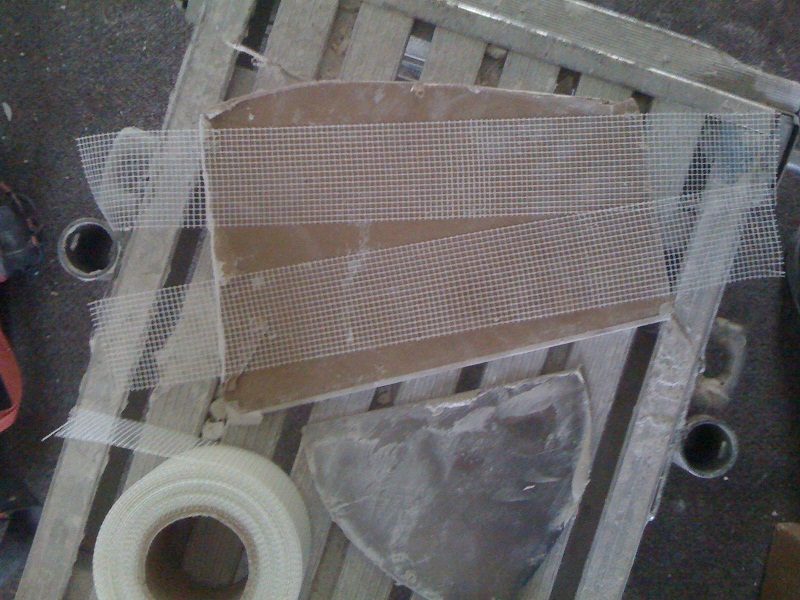
Repairing Drywall Holes with a Hammock / Ohio Patch
Hammock patches are the strongest and easiest method for repairing small to medium holes in drywall. The same drywall that was cut from the wall can be used to replace the area being repaired.
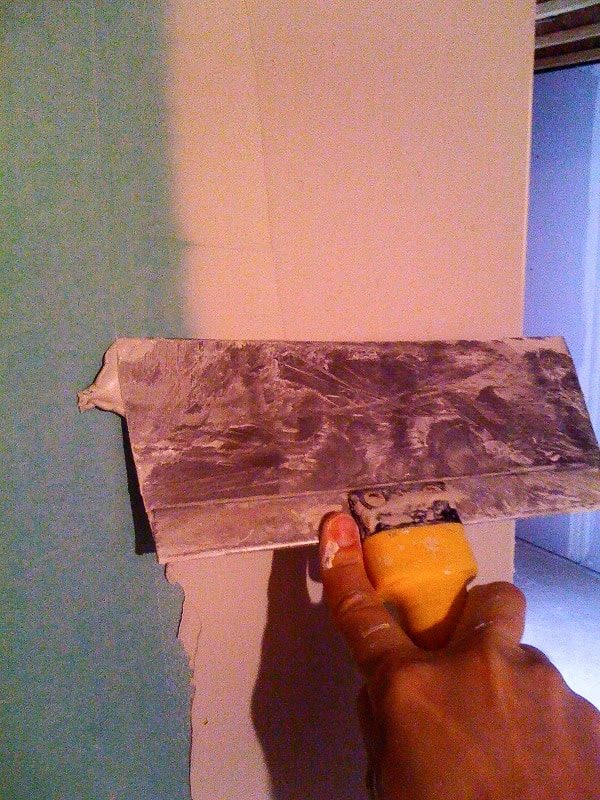
How to Coat Drywall Corner Bead
Corner bead is applied to the outside corners of drywall. The bead protects drywall corners and helps make a perfectly square corner. Usually at least 2 coats of mud are needed. The following 6 steps outline the basic process of coating drywall corner bead.