Mesh vs Paper Drywall Tape: Which One to Use, and Where
Use paper tape on inside corners and anywhere you want the most crack resistance. Use self-adhesive fiberglass mesh on flat seams and patches when speed matters, but only with setting-type compound (hot mud) on the first coat. That isn’t just shop talk: USG tested both tapes and found paper far stronger in compression and shear, and it does not recommend drying-type (premixed) compound over fiberglass tape (USG white paper J2140).
Paper tape: where it wins
- Inside corners and wall-to-ceiling angles. The center crease folds into a straight, sharp corner, and USG recommends paper for corners and wall/ceiling intersections.
- Strength. Paper reinforces the joint compound in compression, bending and shear, so it resists visible cracking better than mesh (USG J2140).
- Works with any mud: all-purpose, lightweight, topping or setting-type. USG says paper is required whenever a drying-type compound is used to embed the tape, and it’s the tape for mechanical taping tools (USG data sheet MH1178).
- The catch: it has to be bedded in a full, wet coat of mud. Bedding mud that’s too dry causes blisters under the tape, and too much mud under the tape causes crowns in the joint (USG MH1178).
- Whenever automatic taping tools are used, paper tape is required. Applying paper tape with a bazooka is often faster than mesh, which must be applied by hand.
Mesh tape: where it wins
- No bedding coat. Mesh tape is self-adhesive: stick it on the seam, then cover with hot mud. This makes it fast on flat seams when using hand tools, and easier for a DIYer who has trouble bedding in paper tape with the right amount of mud.
- Patches and repairs where you want tape that stays put while you mud (How to repair holes in drywall; Hammock patch).
- Rule one: bed mesh tape in setting-type compound (What is hot mud). Press the mud through the mesh so that it sticks firmly to the board; not pressing the mud in firmly increases the chance of stress cracks. Keep the strands flat across the joint. When taping a gapped joint, take care not to allow the mesh to push into the gap between boards (USG MH1178).
- Weak spots: mesh stretches under load, so the mud over it cracks at lower loads than over paper (USG J2140). It also won’t fold cleanly into an inside corner. Use paper there.
- No need to pull out the automatic taping tools, bazooka and pump, for smaller jobs.
Which is stronger, paper or mesh?
Paper is stronger for resisting stress cracks. USG tested this with combinations of both mesh and paper and both kinds of compound. When drying-type compounds were used, mesh joints were significantly weaker than paper under loads of compression, shear and bending. When mesh was combined with setting-type compound, it was marginally stronger only in expansion (being pulled apart), and paper was still far stronger in compression and shear (USG J2140).
Neither tape fixes a structural problem. Most seam cracks start with poor framing, missing backing or improper fastening (Why drywall seams crack; How many screws per sheet).
Using fasteners that are too short shows up later as cracks and pops. Check your spacing → Drywall Screw Spacing Estimator.
How to tape a seam with paper or mesh
Paper tape
- Pre-fill wide gaps and broken edges with setting-type compound and let it harden.
- Lay a bedding coat of mud with a 6" knife (Six-inch drywall knife).
- Press the tape into the wet mud and wipe it down firmly, leaving a thin layer under the tape. Make sure there are no dry spots under the tape. Dry spots lead to bubbling when top coats are applied.
- Skim a thin coat over the tape right away to keep the edges from curling (USG MH1178).
- After it dries (or sets), apply the fill and finish coats, feathering each one wider.
Mesh tape
- Lay the mesh directly centered on the seam. Make sure it is flat and without wrinkles. Press it onto the board using a 6" knife.
- Cover the mesh completely using setting-type compound, forcing the mud through the mesh with the knife until the tape is fully embedded.
- Remove excess mud so that only a thin layer of mud beds in the tape.
- Once it sets, apply the fill coat, then the finish coat. USG says a setting-type system finishes a mesh joint in two coats (USG J2140). Many finishers use a lighter-sanding compound for the final coat.
Mesh or paper for repairs?
- Small holes and dents: mesh or a self-adhesive patch, bedded in setting compound (Repair holes in drywall).
- Bigger holes: a California patch uses the drywall’s own face paper as the tape (California patch), and a hammock patch hangs the plug on strips of mesh tape stuck to its back (hammock patch).
- Cracks: find the cause first, then re-tape. Paper is the safer choice where the joint moves (Repairing drywall cracks).
FAQ
Can I use premixed all-purpose mud with mesh tape?
Not for the first coat. USG does not recommend drying-type compound with fiberglass tape. Bed the mesh in setting-type compound; finishers often switch to an easier-sanding mud for finish coats.
Can mesh tape go on inside corners?
It can be forced in, but it won’t make a crisp corner and it cracks more easily. Paper tape is recommended for inside corners and wall/ceiling angles. Using mesh tape in corners is highly discouraged.
Why does my paper tape bubble?
Usually the bedding mud was too dry or too thin under the tape, so it didn’t bond. Cut out the blister, add mud under the tape, and re-coat.
Do professionals use mesh tape?
Yes, for flats in some settings. USG recommends fiberglass tape with setting-type compound on flat joints in factory-built housing because it’s faster, and still recommends paper for corners and angles (USG MH1178).
Is mesh tape better for fixing cracks?
No. Mesh crack-resistance is lower than paper (USG J2140). Fix the cause (framing, backing, fasteners) and re-tape with paper where the joint moves.
See also
Keep reading
California Drywall Patch
The California Drywall Patch is one of the most common ways to repair drywall. Cut the patch 3 inches larger than the hole being repaired. Score the drywall paper and break away the flaps.
The Story of the California Patch
The California Drywall Patch is one of the most common ways to repair drywall. Larry sent in a humorous but possibly believable explanation for the origin of the California Patch. Please enjoy.
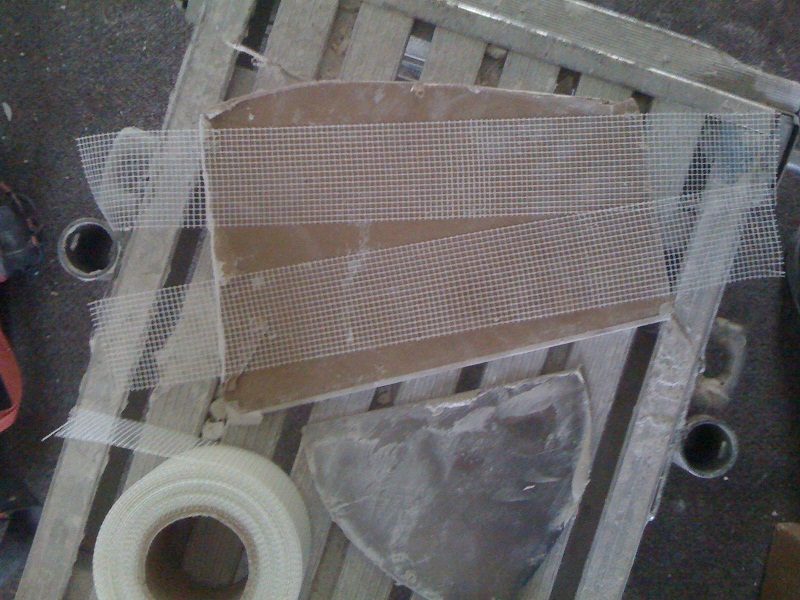
Repairing Drywall Holes with a Hammock / Ohio Patch
Hammock patches are the strongest and easiest method for repairing small to medium holes in drywall. The same drywall that was cut from the wall can be used to replace the area being repaired.
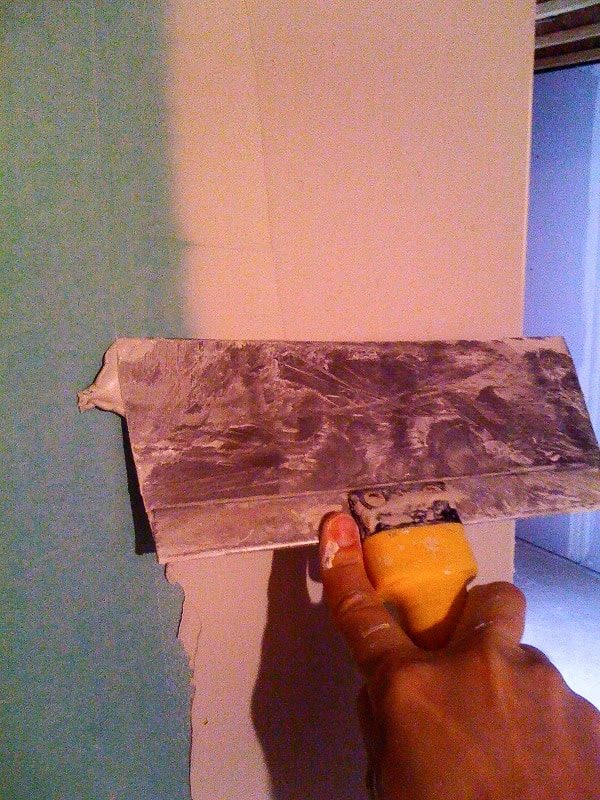
How to Coat Drywall Corner Bead
Corner bead is applied to the outside corners of drywall. The bead protects drywall corners and helps make a perfectly square corner. Usually at least 2 coats of mud are needed. The following 6 steps outline the basic process of coating drywall corner bead.